
 English
  Lietuvių
  Latviešu
  Polski
  Português
  Română
  Slovenčina
  Magyar
  Русский
  Espanol
  България
  Čeština
  Italy
Italy  Croatia
  Greek
Greek 
Moving to the Netherlands to kickstart your career is an exhilarating adventure. You’ve got the job offer sorted through Robin.jobs, your accommodation lined up, and you’re ready for the next chapter. But among the first practical hurdles you’ll face is figuring out how to get around efficiently.
While work transportation will be arranged, you still want to know how to explore the country. Luckily, the Netherlands boasts one of the world’s most sophisticated and integrated public transportation networks. This guide, tailored for international professionals arriving via Robin.jobs, will walk you through everything you need to know about public transport in the Netherlands, making your daily commute or weekend explorations seamless.
From the moment you touch down at a Netherland airport to mastering the buses in the Netherlands and the iconic train system, we’ve got you covered.
Your Gateway: Netherland Airport Connections
Whether you arrive at Schiphol Airport (AMS) in Amsterdam, Eindhoven Airport (EIN), or another regional hub, you’ll immediately encounter Dutch transportation at its finest.
- Schiphol Airport: Schiphol is a major global hub with a bustling train station right beneath the main terminal. NS (Nederlandse Spoorwegen) trains offer frequent and direct connections to Amsterdam Centraal, Utrecht Centraal, Rotterdam Centraal, and other major train stations across the country.
- Regional Airports: Smaller airports like Eindhoven are well-connected by dedicated regional buses to nearby major train stations. From Eindhoven Airport, for instance, buses connect frequently to Eindhoven train station, unlocking the national rail network.
The Heart of Public Transport in The Netherlands: The OV-chipkaart
Before you hop on your first train or bus, you must understand the OV-chipkaart. This singular smart card is the key to almost all public transport in the Netherlands.
It’s a contactless payment system for the entire transportation network for trains, trains, metros, ferries, and buses in the Netherlands. It’s like a ticket, wallet, and subscription in one.
Personal vs. Anonymous Cards
Anonymous OV-chipkaarts are ideal for short stays or if you’re not planning complex travel routes. You can buy these at ticket machines in stations and selected shops. It’s transferable, but you can’t load personal subscriptions (like discount products) onto it.
Personal OV-chipkaarts are ideal for long-term residents. These have your details and photo, with loadable discounts and season tickets. You can even connect it to your bank account for OV-pay (automatic top-up), ensuring you never have an insufficient balance.
Essential Guide to Use
- Top Up: Ensure your card always has a sufficient balance before traveling. The minimum required balance for national trains is significantly higher than for regional travel. You can top up at station machines or set up automatic reloading.
- Check In & Check Out: Every journey must begin with checking in at a card reader and end with checking out. Failure to check in/out correctly results in a standard fee being deducted, often higher than the cost of the trip. Remember to check out even when switching between different types of transport.
Netherlands Public Transport: Riding the Rails
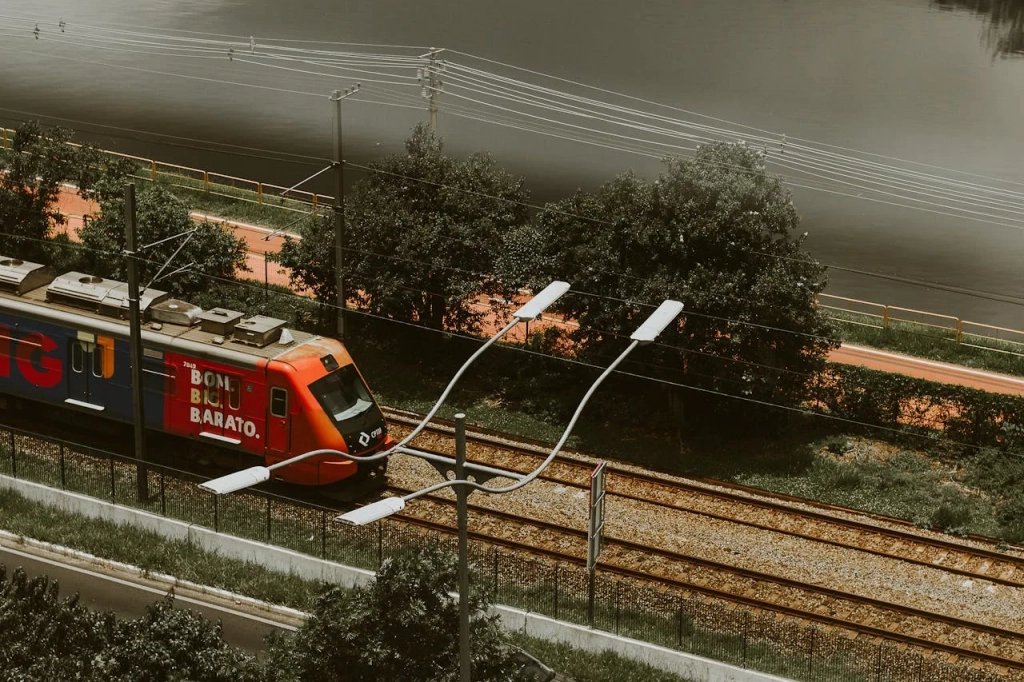
The national railway operator (NS), is the backbone of transportation in the Netherlands. The punctual and efficient train network connects almost every corner of the country,
Luckily, understanding the network is simple once you get to know the two main service types.
- Intercity (IC): These are faster trains that skip smaller stations, designed for longer distances between major hubs like Amsterdam, Rotterdam, Utrecht, and The Hague. They offer both 1st and 2nd class compartments.
- Sprinter: These are stopping trains that halt at every single station along their route. They’re excellent for regional commutes and shorter journeys. While they generally don’t offer 1st class, they provide a reliable, frequent service.
Source: Pexels
International Routes
NS International opens up the rest of the continent, with major hubs like Rotterdam or Amsterdam offering services to London and Paris. There are also high-speed ICE trains that connect the country with most major German cities. Remember to check specific booking rules, as seat reservations are often mandatory on these international trains, unlike domestic services.
Buses in the Netherlands: Regional and Local Reach
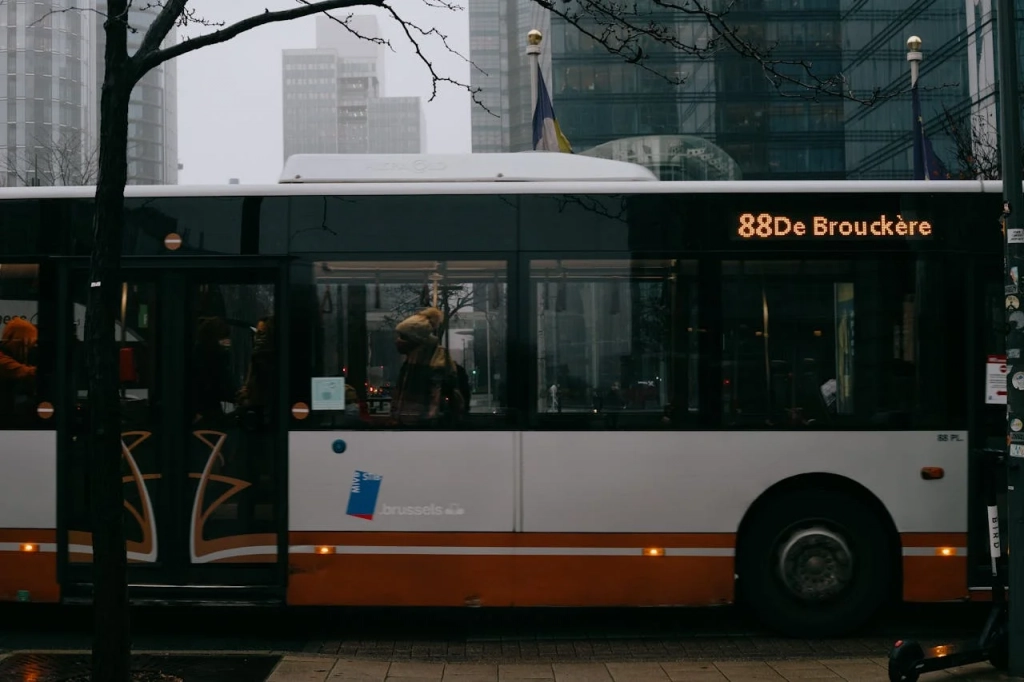
Buses in the Netherlands are just as complex as the railway network, but they are more focused on regional and local networks, connecting smaller towns to rural areas. Buses connect with train stations and economic hubs, creating an intricate transportation system.
Key operators are Connexxion, Qbuzz, and Arriva, running frequent services and punctual timetables.
Regarding local transport, major cities like Amsterdam (GVB), The Hague (HTM), and Rotterdam (RET), have their own extensive networks of local trams and metros as well. All of these urban services operate using the OV-chipkaart system, simplifying your commute across different modes.
9292 Travel Planner
If you want to organise a trip, you should forget complex paper timetables and bulky maps. Simply use the 9292 Travel Planner app for all transportation in the Netherlands.
Just add your starting point and destination, and the app will automatically generate door-to-door travel advice. From specific route options to exact departure times and arrivals for metros, trains, buses in the Netherlands, and more.
It even estimates the total cost of your journey. Using a powerful planning tool like 9292 is key to navigating the network efficiently, especially during complex commutes.
Source: Pexels
Embracing the Local Way: OV-fiets
You can’t talk about Dutch transportation without mentioning bicycles! The Netherlands is perhaps the most bike-friendly country globally, and cycling is deeply woven into the fabric of daily life.
If you don’t have your own bike, you can simply use the OV-fiets (public bicycle) scheme managed by NS. They are available at all larger train stations, enabling you to rent bikes with your personal OV-chipkaart. It’s incredibly convenient, affordable, and lets you experience cities from a true local perspective. Just remember that it requires a personal, registered card.
Key Factors for a Smooth Journey
Here are a few things you should know about transportation in the Netherlands and how some of the day-to-day things function:
- Tickets & Fares: Your OV-chipkaart fares are calculated based on distance. If you don’t have an OV-chipkaart, you can purchase single tickets from NS machines (often with a small service fee) or directly on some buses (usually with a surcharge). E-tickets are also available via the NS app or website for specific journeys, often offering good value if booked in advance. Be sure to understand different fare types, like peak/off-peak fares, as traveling during quieter times can be significantly cheaper.
- Disruptions: While reliable, public transport in the Netherlands does experience occasional planned maintenance or unexpected delays. Always check for announcements at stations and consult the 9292 or NS apps for real-time information before and during your journey. In case of major issues, replacement transport like replacement buses are usually arranged promptly.
- Ferries: In certain coastal regions or major port cities like Amsterdam, you’ll find essential ferries included in the public network. Many, like the GVB ferries in Amsterdam connecting the main station to the north, are free for pedestrians and cyclists, offering a unique commuting experience.
- Connecting Transport: The goal of the Dutch system is to minimise hassle. Hub connectivity is prioritized, meaning transfer times at major stations are optimised, and different modes of transport are located close together, making the shift between train, bus, and bike seamless.
Alternative Mobility: Car Transport and Walking
While public transport is the dominant form of travel, cars are still sometimes necessary. The country has an excellent highway network. However, the roads can be rather congested, and rush hour traffic can be rough around major cities, making commuting unnecessarily longer.
Be aware of parking (cities, P+R) costs, which can be high in urban centers, and investigate electric vehicle charging stations if you opt for an EV.

Source: Pexels
Lastly, don’t forget the simplest form of transport: your own two feet! Many Dutch cities feature walkable, often historic, city centers that are a delight to explore.
What Happens When Things Don’t Go to Plan?
While the Dutch public transport is punctual and efficient, disruptions and services running late are inevitable. Here’s what you need to know:
Planned Maintenance and Engineering Works
nS and other operators have their published maintenance and engineering work schedules, about which they notify the public weeks or months in advance. You can also check these out via the NS or 9292 Travel Planner apps, or on station information screens.
In these instances, replacement transport (often in the form of direct buses) is organised to minimize inconvenience. Be prepared for potentially longer journey times or multiple connections.
Strikes and Unexpected Delays
While less frequent, strikes by transport unions or unexpected issues (like extreme weather or breakdowns) can also cause delays. During such events, information can change rapidly.
The most reliable sources for up-to-the-minute updates are the official operator apps and websites, as well as looking for real-time announcements on delay information screens and listening to announcements at stations. Staff assistance is also readily available to help re-plan your route.
Refunds and Compensation
If you experience a significant delay on an NS journey (usually 30 minutes or more), you may be entitled to partial or full compensation through their “money back for delays” scheme. It’s important to understand the specific terms and conditions and how to make a claim via the NS website or app.
The Rules and Ethics of Travel on Dutch Transportation
Finally, a few practical tips and cultural nuances can ensure a smoother and more respectful travel experience.
- Tickets & Fares – A Reminder on Validation: The single most crucial rule for a good journey is proper card validation. Failure to validate your travel correctly, even unintentionally, can result in steep fines and an unpleasant experience.
- Etiquette for a Positive Experience: Dutch public transport generally maintains a high standard of etiquette that contributes to a positive experience for everyone. This includes:
- Letting passengers get off the train, tram, or metro before boarding.
- Keeping conversations at a reasonable volume, especially during quieter off-peak times.
- Utilising the luggage racks or designated spaces for bags and suitcases, rather than blocking aisles or seating.
- Being mindful of others when using headphones or making phone calls.
- Offering seats to the elderly, pregnant individuals, or those with mobility challenges.
Source: Pexels
Finishing Thoughts on Public Transport in The Netherlands
While the initial learning curve can seem daunting in Dutch transportation, particularly when understanding the intricacies of the OV-chipkaart and the various transport operators, the system is designed to be highly integrated and intuitive once understood. And by using essential tools like the 9292 and NS apps, you’ll have all the information you need right at your fingertips, enabling you to travel with confidence and ease.
We understand that starting a new job in a different country involves managing many logistical challenges, and we are here to ensure that navigating your daily commute or exploring your new surroundings is one of the smoothest parts of your transition.
Register on Robin today to not only discover your next career move but also to unlock a wealth of resources and support designed to make your move to the Netherlands a success.