
 English
  Lietuvių
  Latviešu
  Polski
  Português
  Română
  Slovenčina
  Magyar
  Русский
  Espanol
  България
  Čeština
  Italy
Italy  Croatia
  Greek
Greek 

Looking to find work abroad but you don’t really know how to find a job in Europe and where to apply?
Here are 5 ways to get a reliable job abroad. Each has its advantages and disadvantages, so think about all the options before deciding which one is the most convenient and affordable for you.
1. Use an Intermediary Recruitment Agency in Your Country
If you want to know how to move to Europe and find a job the most convenient way, contacting recruitment agencies in your home country would be the best bet. They are likely to offer jobs in several foreign countries, and if you are from an EEA member state, you probably won’t even need overly complicated paperwork of special licenses.
Still, you should read up about possible visa requirements (especially for non-EU citizens), sponsorships (for students and skilled experts), and research the basics of your destination’s immigration policy so you can ensure legal stay for the long-term.
Why do this? Understanding these nuances will help you better understand whether the company you are working for is reputable or not, and not an illegal operation.
How to Check Whether an Agency is Reliable
Reviews
The best way to see whether you are connecting with reputable hiring managers is asking around their previous clientele about their services. These people will be able to give you the most reliable information about their experience of working abroad and advise you on the best agency to choose.
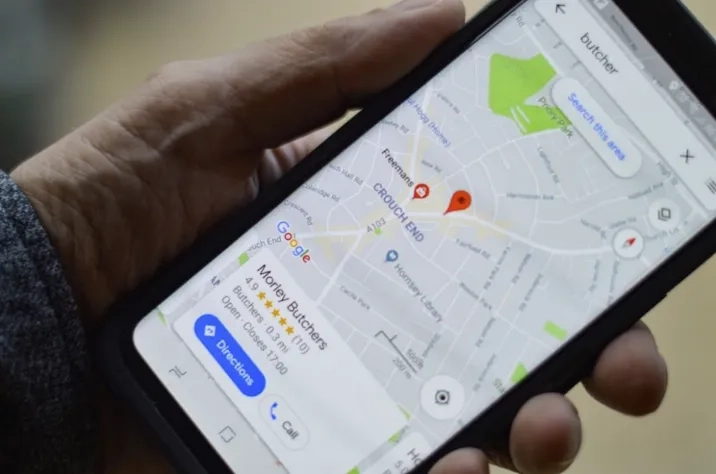
Online reviews are another great source, but you need to check whether the reviews are genuine. Bear in mind that people tend to leave reviews when they are dissatisfied with the service provided and very rarely describe and rate a good experience. Therefore, these evaluations do not always reflect the real situation.
To check the credibility of a review, it is important to check other reviews written by the same person. Some people write them sincerely and provide really useful information, but others just want to make their opinions known, not necessarily in a well-founded way, and they do this by any means possible. And the way in which the agency described reacts to the various reviews shows how much it values its clients and how important their opinions are to it.
If the recruitment agency publishes employee reviews of its services, check how these reviews are collected and whether all reviews are actually published online. If you only see positive feedback, take it with a pinch of salt, as even the most trustworthy agency will receive negative feedback.
Robin Agency is open and willing to share both positive and negative feedback about its services with all people looking for work abroad. We believe that this is the only way for jobseekers to get a clear and realistic impression of what awaits them when they go to work and live abroad.
Does The Recruitment Agency have its Own Office
Robin started off with a single office in Lithuania, but we soon realised that proper networking, when candidates can interact with recruiters in their home country, is a much better way to build trust and to give and gain professional advice or assistance.
On the other hand, job interviews can be more pleasant and smoother when there is the possibility of a face-to-face interaction rather than an online one with a video camera.
You can check with your country’s business register to see if the recruitment agency you are considering has an office. If an office address is listed, use Google maps or Google street view to check whether it actually exists. We also use this tactic when we make contact with new partners in the Netherlands or Germany and plan a meeting with them.
The Agency’s Recruitment Services are Free of Charge
We have all heard stories of gullible jobseekers who paid a recruitment fee to a recruitment agency and then went abroad to work and got no job. Fortunately, such cases are becoming increasingly rare.

That said, stay away from recruitment agencies that charge recruitment fees. European law prohibits the charging of recruitment fees to people looking for work abroad. Surely you do not want to use an agency that profits from breaking the law and deceiving people?
An honest agency does not make money by charging a brokerage fee to jobseekers, but by charging a fee to its partners abroad. And if the partners are not willing to pay the agency a brokerage fee, that says a lot about the agency’s reputation and the quality of its services.
Ask Questions and Ask for Details!
As we mentioned, understanding the basics of international recruitment can help you check the agency’s validity. Ask what interests you and ask them to walk you through the process.
An experienced recruiter will tell you in detail about everything you can expect to find when working abroad. Robin’s recruiters often visit the countries where we recruit so that they can get to know the working and living conditions as well as possible and can tell you everything in detail.
This way, there’s no room for unrealistic expectations and no disappointment when you go to work abroad.
What Guarantees Does the Agency Give You
During your job interview with the agency, make sure you ask what guarantees the agency gives you. If you are looking for English-speaking roles at a multinational company, or in a job with residence and expect the company to take care of all of the paperwork, ask for guarantees that the agency will provide the services.
This will avoid unpleasant situations when you arrive in a new country.
2. Get a Job Through a Foreign Employment Agency
Another way you can work in Europe is by applying to a job directly to a recruitment agency in the country where you want to work (for example, the Netherlands).
This can be a convenient way if you know exactly which region you want to work in and that the agency you contact offers exactly the kind of recruitment and accommodation conditions you expect. Bear in mind that living conditions and payment of salaries may vary slightly from agency to agency, so make sure you check in advance and get a detailed breakdown of net income, gross salaries, and possible social contributions.

How to Check The Credibility of a Recruitment Agency?
Depending on the country you are planning to go to, you can check the quality of the services provided by the agency and its reliability by using the following criteria:
Whether the agency belongs to an association of recruitment agencies or a similar organisation
For instance, there are organisations such as the NBBU and ABU in the Netherlands. . If the recruitment agency through which you want to get a job belongs to one of these organisations, you can be sure that it will comply with the basic requirements in terms of the recruitment contract and the payment of wages.
The UK has a Recruitment and Employment Organisation, which also sets standards for recruitment agencies in this country. If you are interested in working in England, you can check whether a recruitment agency belongs to the REC.
What Additional Services Does The Agency Provide?
The country where you plan to work determines what additional services the recruitment agency provides in addition to the recruitment service. In our experience, the lower the unemployment rate in a country and the higher the demand for workers, the more additional services a recruitment agency provides.
Take France for example. The country has a relatively high unemployment rate in contrast to other EU countries, so you shouldn’t expect recruitment agencies to take care of your trust and provide you with a place to live.
In the Netherlands, the situation is the opposite. The country has one of the lowest unemployment rates in Europe, so when you arrive to work in the country, a Dutch recruitment agency will not only welcome you but also provide you with the services you need:
- Salary payment;
- Accommodation;
- Documentation (i.e. employment contract, insurance, legal worker number);
- Transport to and from the workplace;
- Assistance with medical consultation if needed;
Before choosing a recruitment agency, find out what services it provides and think about what you are prepared to do yourself in case the agency cannot help.
How Employees Rate the Agency
Just like when you go abroad to work through a local recruitment agency, when working through a foreign agency it is important to check the feedback from the staff about the agency. The best feedback comes from people in your immediate environment. Also people who have worked for several agencies and know their advantages and disadvantages.
3. Apply for a Position Directly With the Company
If you’ve been living abroad for some time, and have the necessary skills and competences, it may be convenient to apply to a particular company directly.
If you already have a place to live and a vehicle with which you can travel to and from your place of work, then it is possible to apply for a job without using a temporary employment agency.
However, there are 6 reasons why it is not worthwhile to work directly for a company for first-timers:
- Employees who work directly for a company are less likely to work extra hours compared to employees who work for the same company through a recruitment agency;
- In the event of a reduction of work in the company, there is a higher chance of being unemployed;
- The employment contract and other employment-related documents may be drafted in a language you do not understand;
- You are unlikely to be given a place to live;
- You will have to arrange your own transport to and from the workplace;
- In the event of problems or things not going as you expected, it is unlikely that you will have anyone to turn to for help;
For these reasons, we do not recommend direct employment for anyone planning to work abroad for the first time. Only workers who know specific companies, have their own place of residence and a means of transport can consider this option.
4. Use Your Country’s Job Centre
The possibility of getting a job abroad through your country’s Job Centre depends on the country where you live.
Licence to Recruit in Latvia
Recruitment agencies in Latvia that offer recruitment services abroad to local residents must be licensed to do so. The licence, which allows you to carry out recruitment agency activities, is granted by the local Labour Exchange . If you go abroad to work with a licensed agency, you can be sure that the agency complies with the basic requirements for agencies.
Job Centre in Portugal
Employment agencies in Portugal that help you get a job abroad do not have to be licensed to operate. The local Job Centre works in partnership with Eures to help unemployed Portuguese people find work abroad.
Eures is a European employment service and cooperation network that aims to ensure the free movement of workers in the 28 EU countries and Switzerland, Iceland, Liechtenstein and Norway.
Robin also tried to work with Eures, but we were not satisfied with the slowness with which jobseekers were matched with employers abroad. In the international labour market, the demand for workers changes every day, so it is important to react quickly to these changes.
Recruitment agencies in Romania are subject to checks by local authorities
In Romania, recruitment agencies are inspected by the Ministry of Labour to make sure they meet certain requirements. This provides security for workers looking for work abroad.
Although recruiting abroad through the local Job Centre is safe and secure, it is a lengthy process that will require a lot of time and energy from you. It is therefore better to use a reliable local recruitment agency.
5. Get a Job Abroad After Signing a Lithuanian Employment Contract
If your employer in Lithuania offers you a temporary work project in another EU country, they may offer you a temporary work contract and an A1 (E101) certificate. The A1 certificate is a document proving that the employee in Lithuania is covered by social security and will not have to pay social security contributions in the other country to which they are posted. This certificate is required for employees of Lithuanian companies who are sent by their employer to work abroad.
Benefits:
Working abroad with a Lithuanian contract can be an attractive option if your Lithuanian employer sends you abroad for short-term work. You won’t need to sign additional contracts and all the information you receive will be in Lithuanian.
Another advantage is that you are likely to receive a travel allowance and a daily allowance. This will increase your monthly salary. This way you can earn more money in a short time.
Disadvantages:
Working abroad with a Lithuanian contract also has its downsides:
- You won’t build up a pension fund in the foreign country where you go to work;
- You can only stay in the foreign country for a maximum of 3 months per year;
- Your local health insurance will only cover a very small part of your health costs;
- The paperwork for a worker going abroad takes a long time and is prone to errors;
- Some agencies do not comply with the law and use this method of recruitment to save tax;

Choosing Your Path to Employment in Europe
How to move to Europe for work? The opening of EU borders offers diverse routes to working abroad, each with unique trade-offs. Your choice should depend on your experience level and current resources:
First-Timers
Use a local recruitment agency. Always verify their reliability via online reviews or personal referrals. Never pay a recruitment fee and always insist on written guarantees.
Experienced Workers
Contact agencies directly in the destination country. Look for membership in national recruitment associations as a hallmark of credibility.
Independent Seekers
If you already have housing and transport, you can apply directly to employers. However, be prepared to handle the administrative hurdles yourself.
Institutional Support
Check your local National Job Centre. Ensure any agency you use holds the required government licenses to guarantee they meet legal standards.
Final Tip:
If offered a contract through a third-party country (e.g., a Lithuanian employment contract), meticulously review the terms and paperwork before signing.
Want to explore the first option? Just register with Robin and contact one of our recruiters.