
 English
  Lietuvių
  Latviešu
  Polski
  Português
  Română
  Slovenčina
  Magyar
  Русский
  Espanol
  България
  Čeština
  Italy
Italy  Croatia
  Greek
Greek 
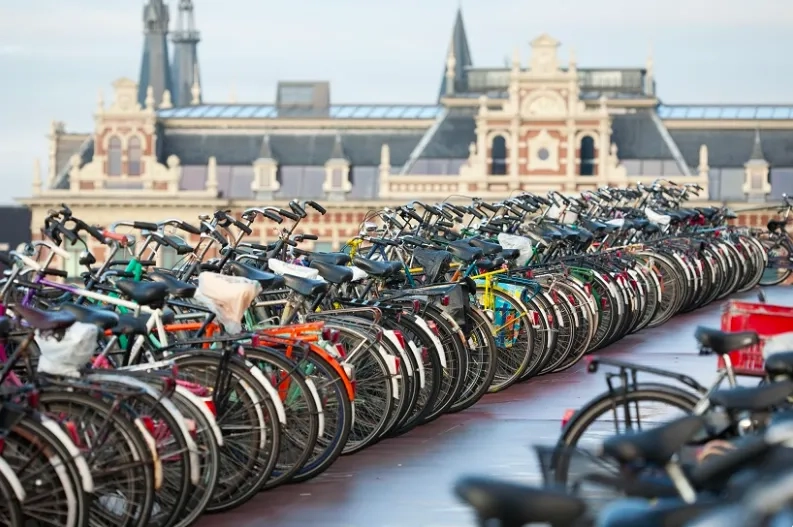
If you are staying in the Netherlands for any significant length of time, buying a bike isn’t a lifestyle choice, but a worthwhile and smart investment. You don’t have to be an expert on Dutch culture to know that the bicycle is the key to the Netherlands. Some even dare to say that hopping on a bike is the best way to forget the fatigue of the day’s work and see more of your surroundings in a brighter way.
In the Netherlands, the fietser (cyclist) is king. This isn’t just a result of the flat landscape; it is the product of decades of intentional policy, cultural shifts, and a world-class engineering marvel that treats two wheels with more respect than four.
You’ve guessed it, this article aims to cover everything about Netherlands cycling, from mandatory helmet laws to public transport integration and everything in between.
The Engineering of Freedom: Infrastructure
Depending on which country you come from, you might dismiss bike lanes altogether. That said, there are some European countries where bike paths (Fietspad) and separate bike lines are civil engineering afterthoughts, but in the Netherlands, this isn’t the case.
The Dutch didn’t just build roads for bikes and cyclists, they’ve created a complete infrastructure. When you hit the red asphalt as a cyclist, you are in a safe zone that’s designed to maximise your safety and efficiency during your commute.
- Beyond the Path: While most countries settle for a painted line on a busy road, the Dutch utilise separate bike lanes and grade separation. This means that at major intersections, cyclists often glide over or under car traffic via bridges or tunnels. This means that even though you’re also an active traffic participant, you don’t have to deal with the less sleek form of commute of cars and buses.
- The Superhighways: For those commuting between cities, fietssnelwegen (bicycle highways) provide wide, uninterrupted routes with minimal stops. On these sections, cyclists usually have a priority status at intersections, the paths are wider (3 to 4 meters), designed to be as straight as possible. These superhighways make a 15-20km high-speed e-bike ride nearly as fast as a car commute, reducing carbon emissions and traffic jams.
- Iconic Design: In Eindhoven, you can ride the Hovenring, a spectacular circular cable-stayed bridge that hovers above a busy junction. In Utrecht, you’ll find the Utrecht Central Station parking lot, which is the world’s largest bicycle garage, a multi-story cathedral of steel and rubber that holds over 12,000 bikes.
- The Signs: Keep an eye out for shark’s teeth (haaientanden). These white triangles painted on the ground indicate who has the right-of-way, with the points always directed toward the person who must yield to crossing traffic. In most urban centers, traffic lights are even cycle-specific, turning green for bikes before cars to provide a voorstart (head start) that clears the intersection safely. Advanced infrastructure even includes regensensoren (rain sensors) at many junctions that prioritize cyclists during a downpour, shortening their wait times to keep them moving through the Dutch weather. Furthermore, many major commuter routes are synchronized as a “Green Wave,” allowing you to hit every light perfectly if you maintain a steady pace of approximately 18–20 km/h.
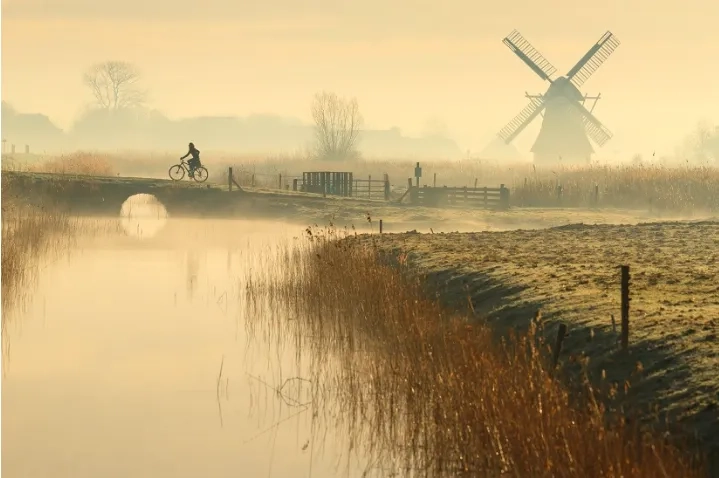
A Culture Built on Two Wheels
The Dutch cycling culture is defined by its “human-centric” approach. It isn’t about the gear; it’s about the utility. You are more likely to see a professional in a suit on an omafiets (granny bike) than a cyclist in Lycra.
- The “Stop de Kindermoord” Legacy: In the 1970s, a massive protest movement called “Stop the Child Murder” pushed the government to move away from car-centric planning. Today, this is reflected in the Sustainable Safety (Duurzaam Veilig) policy, which dictates that if a collision occurs, the design of the road is often to blame, not the individual.
- The Bakfiets Life: The bakfiets (cargo bike) is the Dutch equivalent of an SUV. It is the primary vehicle for transporting groceries, hardware, and multiple children through the narrow streets of Amsterdam or Delft. This also makes sense for a lot of old cities, just like Paris and Rome, where some narrow streets are centuries older than the first car ever.
- Etiquette: While mandatory helmet laws are non-existent, there is a strict unwritten code. You must use a hand signal when turning, and your bicycle bell is your most vital communication tool—essential for alerting tourists who wander onto the fietspad.
Navigating the Polders and Dunes
The Netherlands may be flat, but it is never boring. The country is stitched together by a sophisticated navigation system that makes getting lost almost impossible.
The Knooppunten Network
Using the fietsknooppunten (junction nodes) system, you can plan a customised route by simply following a sequence of numbers. At every intersection, a green-and-white sign displays the number of the current node and directions to the next ones in the network. It is a “connect-the-dots” style of travel that allows you to focus on the surroundings rather than a map, making it the perfect choice for a spontaneous Sunday afternoon ride through the countryside (if you’re up for it).
Long-Distance Mastery
For the adventurous cyclist, the LF routes (Landelijke Fietsroutes) offer a network of long-distance paths that span the entire country. These routes are designed for multi-day trips and take you through the most iconic Dutch landscapes. You can pedal along the high dunes of the North Sea coast, navigate the deep pine and heathlands of the Veluwe forests, or cross the Afsluitdijk, which is a 32km engineering marvel that serves as a dike separating the North Sea from the IJsselmeer lake.
The South Limburg Challenge
If you crave an incline and want to test your stamina, head to the rolling hills of South Limburg. Unlike the rest of the country, this region offers significant elevation changes that provide a different kind of “Netherlands cycling” experience. Here, you will find the Cauberg and Keutenberg, legendary climbs often featured in the Amstel Gold Race. These hills offer steep gradients that challenge even professional riders and provide rewarding panoramic views of the Geul Valley.
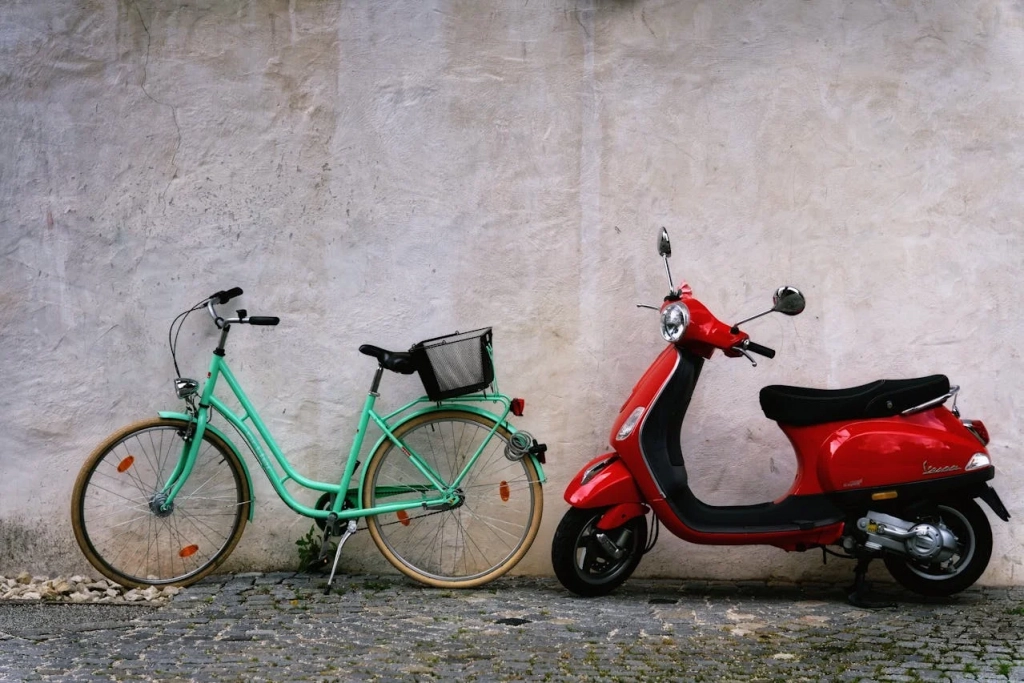
Urban Hubs: A Tale of Many Cities
While cycling is an uniform habit across the country, you can still see that every city will have its own bicycle culture. So, if you don’t know where you’d like to live in the Netherlands yet, maybe this will help you make your decision.
Groningen: The World’s Cycling Capital
Groningen boasts the highest modal share of any city in the world, with over 60% of all trips made by bicycle. The city center is essentially a car-free zone where the “fietser” is the undisputed priority. This design creates a quiet, vibrant atmosphere where students and professionals alike can cross the entire city in under 20 minutes. It is the gold standard for how a city center can belong entirely to the people rather than the motor vehicle.
Utrecht: The Heart of Innovation
Utrecht is home to the busiest bike paths in the country and the world’s most innovative parking solutions. The city recently opened the world’s largest bicycle parking garage at Utrecht Central Station, a three-story underground facility that houses over 12,000 bikes. Because Utrecht is centrally located, its infrastructure is designed for high-volume commuting, featuring wide “bicycle streets” where cars are considered guests and cyclists have the right-of-way at almost every turn.
Eindhoven: The City of Light and Art
Eindhoven blends technology with artistry, most notably seen in the Van Gogh-Roosegaarde cycle path. This unique stretch of infrastructure uses thousands of glowing, solar-powered stones inspired by “The Starry Night.” As a hub for the high-tech and design industries, Eindhoven focuses on smart infrastructure that makes night-time cycling a beautiful and safe experience, reflecting the city’s reputation as the “Brainport” of the Netherlands.
The Randstad: Coastal Beauty and Connectivity
The Randstad, the urban crescent including Amsterdam, The Hague, and Rotterdam, offers a mix of coastal dunes and striking modern architecture. Rotterdam’s wide, industrial-scale boulevards provide plenty of room for high-speed cycling, while The Hague offers elegant routes that lead directly to the North Sea beaches. These cities excel in seamless public transport integration, particularly through the OV-fiets program, which allows you to rent a bike at the train station for the “last mile” of your journey, making it easy to live in one city and work in another.
The “ABC” Checklist for Cycling in The Netherlands
Here’s what you need to know about owning/renting and riding a bike in the Netherlands:
| Essential | Why You Need It |
| The Lock | “Never buy an expensive bike and spend half the price on a sturdy lock.” Bike theft is a national pastime. |
| Lights | Mandatory at night. White for the front, red for the back. Fines are common if you forget. |
| The Brakes | Many Dutch bikes use “coaster” (back-pedal) brakes. Practice in a quiet street before hitting the canal ring. |
| The Bell | Use it sparingly but firmly. It’s the “polite” way to say “get out of my lane.” |
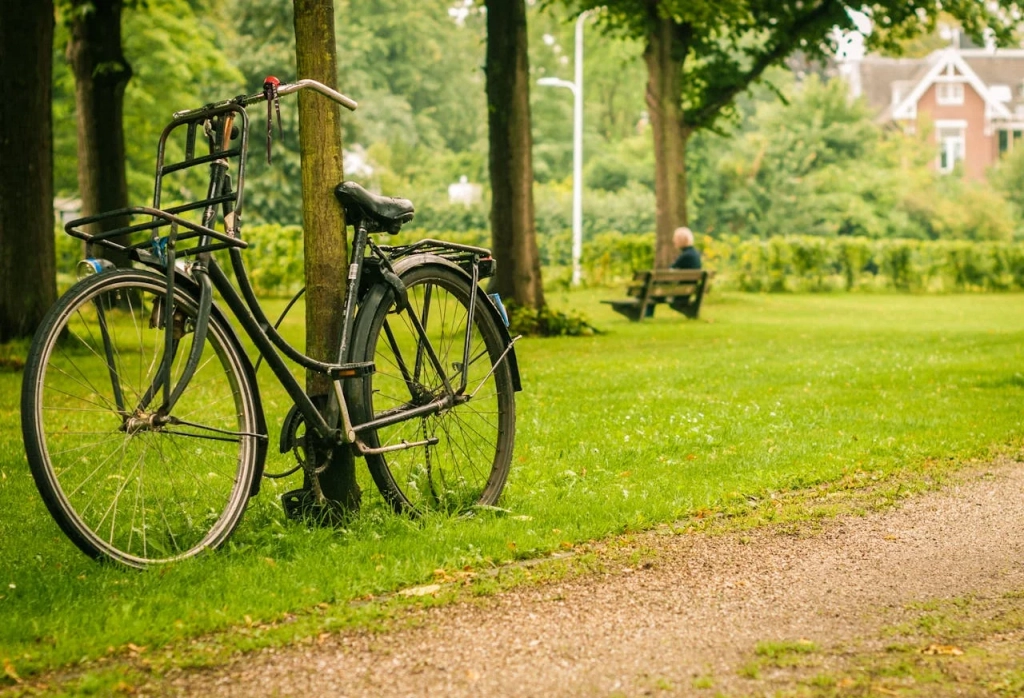
Cycling in the Netherlands is More Than Just Transport
Whether you want to take part in Dutch cycling culture for the fun of it or as a necessity for your everyday commutes, experts will agree that cycling is how you truly experience the Netherlands. And when you come to think of it, cycling reduces your carbon footprint, strengthens your body, and, most importantly, makes you part of the local community.
While this may seem as a huge burden for some, especially if you come from countries where people usually take the bus or car-pool to work. However, over time, we’re pretty sure that you’ll come to appreciate biking culture for what it is: the best part of the day. It’s all about going outside, getting some fresh air, and hitting the open road.
Are you ready to learn more about the Dutch way of life? Feel free to reach out to our recruiters today and take the first step towards the next chapter of your life.