
 English
  Lietuvių
  Latviešu
  Polski
  Português
  Română
  Slovenčina
  Magyar
  Русский
  Espanol
  България
  Čeština
  Italy
Italy  Croatia
  Greek
Greek 

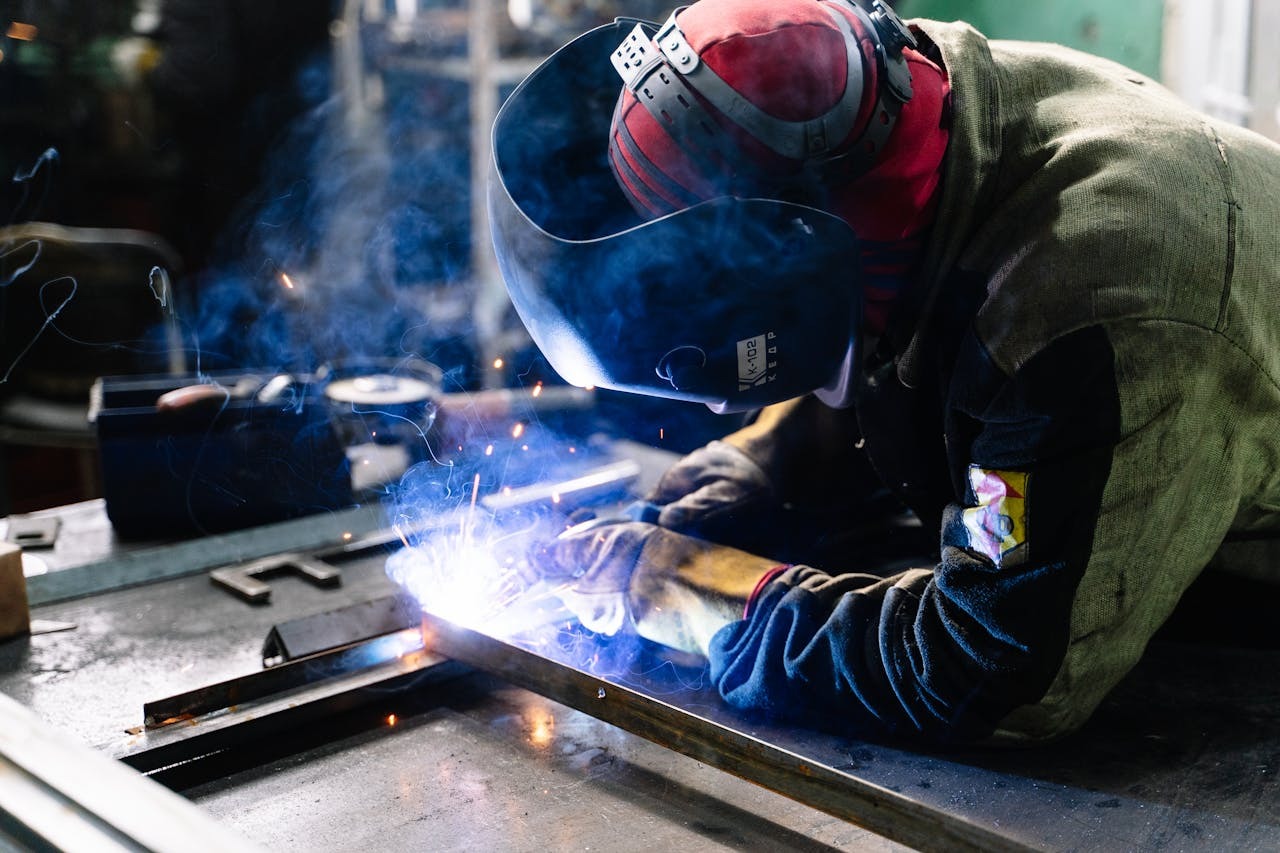
Welding is an essential skill in many industries and a high-demand profession in Germany. As one of Europe’s largest economies, Germany offers numerous opportunities for skilled welders. In 2026, Germany’s labour market will continue to attract foreign workers due to competitive wages, high work standards, and excellent working conditions.
In this article, we’ll analyze all aspects of a welder salary in Germany, breaking down how factors like merit, experience, and gender can influence earnings. We’ll also provide an overview of how much a welder earns in Germany at different stages of their careers and where the highest-paying opportunities are located.
How Much Are Welders Paid in Germany?
On average, welders in Germany in 2026 earn around 28,400 EUR net per year. However, the salary can range from as low as 20,100 EUR annually (for entry-level assistants) to as high as 42,600 EUR for highly specialized master welders. The variation in salaries reflects differences in factors such as geographic location, industry, and the worker’s experience.
| Salary Type | Amount (EUR) |
| Average Net Annual Salary | €30,240 |
| Average Net Monthly Salary | €2,520 |
| Median Net Annual Salary | €29,400 |
| Median Net Monthly Salary | €2,450 |
| Lowest Net Annual Salary | €21,800 |
| Lowest Net Monthly Salary | €1,816 |
| Highest Net Annual Salary | €38,500+ |
| Highest Net Monthly Salary | €3,208+ |
The Elements That Impact Welder Wage in Germany
Several factors can influence a welder’s salary in Germany, including the type of employer, level of education, and gender. Let’s explore these elements in more detail:
Impact of Employer Type
- Public Sector: Welders working for government or public sector employers tend to earn about 8% more compared to their counterparts in the private sector. Public sector jobs are often considered more stable and may come with additional benefits, which can influence overall earnings.
- Private Sector: Welders employed by private companies earn slightly less. However, these roles offer career promotion or specialization opportunities, which can compensate for the lower base salary.
Average Salary of a Welder by Education Level in Germany
Education is a key factor in determining salary. The welder salary in Germany per month is significantly better with higher levels of education. Below is a comparison of salaries based on education level:
| Education Level | Average Net Salary (EUR) | Salary Increase (%) |
| High School | €22,100 | – |
| Certificate or Diploma (e.g., Geselle) | €30,240 | +37% |
| Bachelor’s Degree (e.g., Schweißfachingenieur) | €48,600 | +61% |
As the chart shows, welders with bachelor’s degrees earn nearly double the salary of those with only a high school education.
Germany Welder Salary Compared by Gender
In 2026, gender pay dynamics in the German welding sector continue to show a unique trend. While a gap exists, it remains significantly narrower than the national average for all professions. Here is the updated breakdown:
- Male Welder: The average net salary for male welders in Germany is €30,240 annually.
- Female Welder: Female welders earn an average of €31,750, about 5% higher than their male counterparts.
This indicates that, on average, female welders in Germany continue to earn slightly more than male welders. This trend is largely attributed to the fact that women in the German welding industry are frequently represented in high-precision and specialized niches—such as aerospace and medical technology manufacturing—where certifications and attention to detail command higher premiums. This remains a positive indicator for gender-neutral compensation based on skill and specialization within the trade.

Welder Salaries by City in Germany
Welder salaries in Germany can vary significantly depending on the city in which you work. Several factors, including the cost of living, demand for welders, and the local industrial economy, often influence these differences. Cities with a high demand for skilled labour or a strong industrial sector, such as Munich or Hamburg, offer higher salaries, while smaller cities or those with lower living costs may offer slightly lower wages.
Let’s explore the average welder salaries across major cities in Germany, from highest to lowest:
| City | Average Net Annual Salary (EUR) |
| Munich | €32,300 |
| Stuttgart | €31,950 |
| Hamburg | €31,200 |
| Frankfurt | €30,850 |
| Berlin | €30,400 |
| Cologne | €29,800 |
| Düsseldorf | €29,200 |
| Hannover | €28,500 |
| Nuremberg | €27,900 |
| Bremen | €27,450 |
| Dortmund | €27,100 |
| Essen | €26,800 |
| Dresden | €25,900 |
| Leipzig | €25,600 |
Factors Contributing to Average Welder Salary Differences
- Cost of living: Big cities have a higher cost of living, which typically results in higher wages to help workers cover expenses like rent, groceries, and transportation. In contrast, cities with lower living costs, like Nuremberg or Dresden, may offer lower salaries.
- Demand for welders: Major industrial cities with large manufacturing sectors or high demand for skilled labour tend to offer higher salaries. Cities like Berlin, Frankfurt, and Cologne have strong economies and high demand for skilled workers, which drives wages up.
- Industry presence: Locations near major automotive, engineering, or manufacturing hubs will generally have higher welder salaries. For example, cities like Munich and Stuttgart are home to major automotive companies (e.g., BMW and Mercedes), which increases demand for skilled welders.
- Economic size: Larger cities often have more job opportunities and a competitive job market, which may drive salaries higher to attract workers. Smaller cities with fewer opportunities may have less competition, but the lower demand can result in lower salaries.
So, if you’re looking for higher earnings as a welder, larger cities with strong industries are likely to offer the best pay. However, it’s important to consider the cost of living in these cities to get a complete picture of your potential financial situation.
Are Regular Raises and Bonuses Common for Welders in Germany?
While bonuses are not standard in the welding profession in Germany, welders have opportunities to boost their earnings through overtime, night shifts, and pay raises. However, to achieve a significant increase in income, many welders rely on job changes, acquiring new skills, or transitioning to higher-demand regions or industries.
Potential Pay Raise for Working as a Welder in Germany
Working in Germany as a welder has many advantages. In addition to bonuses and shift premiums, the welder average salary can be increased through annual pay raises. On average, a welder in Germany can expect a 7% annual pay raise. However, the increase typically occurs over 16 months, slightly longer than the typical 12-month cycle seen across many professions in Germany.
The frequency and size of raises can also vary based on the company, location, and the worker’s experience level.
In Germany, bonus payments for welders are relatively unusual compared to other job roles. However, certain incentives, like pay raises, overtime, and night shift allowances, can significantly impact a welder’s overall compensation.
Bonus Payments
Approximately 35% of welders report receiving bonuses in the past 12 months. For those who did receive a bonus, the amounts ranged from 0% to 4% of their base salary. This suggests that some companies may offer small incentives based on performance or other factors. Some analytics websites report the yearly bonus amount.
Overtime
Welders often have the opportunity to earn extra money through overtime, especially in industries with high demand. Overtime pay comes at a higher rate, often 1.25 to 1.5 times the regular hourly rate. The average welder salary in Germany per hour is 18,48 EUR gross.
Night Shifts
Night shift premiums are also possible for welders working in sectors like manufacturing or construction. As per Germany’s Working Time Act, these premiums are worth 25% on top of the regular hourly rate. The common practice is compensating workers for the less desirable work hours between 11:00 PM and 6:00 AM.

Welder Salaries in Germany vs. Other Countries
When comparing welder salaries in Germany to those in other countries, it’s important to consider monthly rates and how much welders make an hour to understand the full picture of compensation.
In Germany, welders earn relatively favourable wages, especially when considering the cost of living in Germany, but how do these compare to other nations?
| Country | Monthly Gross (EUR) | Hourly Rate (EUR) |
| Belgium | €4,507 | €26.00 |
| Netherlands | €4,160 | €24.00 |
| Austria | €3,980 | €23.00 |
| Germany | €3,467 | €20.00 |
| United Kingdom | €3,380 | €19.50 |
| France | €3,293 | €19.00 |
| Italy | €3,120 | €18.00 |
| Spain | €2,946 | €17.00 |
Average Welder Salary in Germany: Complete Summary
If you’re interested in securing a job abroad after learning how much welders make a year, many foreign candidates choose to work with recruitment agencies that specialise in industrial jobs. These agencies can help match you with employers looking for welders.
While agencies typically charge a service fee (often reflected in a slightly lower salary), they offer several advantages:
- Facilitated job search: Recruitment agencies often have relationships with employers and can match you with the right opportunities faster. Even better, they can usually help you find your next employment while you’re still at your first job.
- Provided accommodation: Many agencies help secure accommodation, which can help you move to Germany and lower your costs significantly (which means you would still earn more in the end compared to a higher-paid job without provided accommodation).
- Visa and work permit assistance: For international workers, agencies often provide guidance on visa applications and work permits, which simplifies the process of relocating and working in Germany.
So even though there might be a service fee included or a lower starting salary on paper, you still have better chances of earning and saving more when you find a job with the help of a recruitment agency. When you take all things into account, such as accommodation, transportation, and landing a job in the first place, this option might become very appealing to you.
How to Land a Welder Salary in Germany?
If you’re ready to take the next step and explore welder opportunities in Germany, check out the available job offers at a platform designed to connect skilled professionals with top employers in Germany. Browse available positions, find the best salary proposals, and start your journey today!