
 English
  Lietuvių
  Latviešu
  Polski
  Português
  Română
  Slovenčina
  Magyar
  Русский
  Espanol
  България
  Čeština
  Italy
Italy  Croatia
  Greek
Greek 

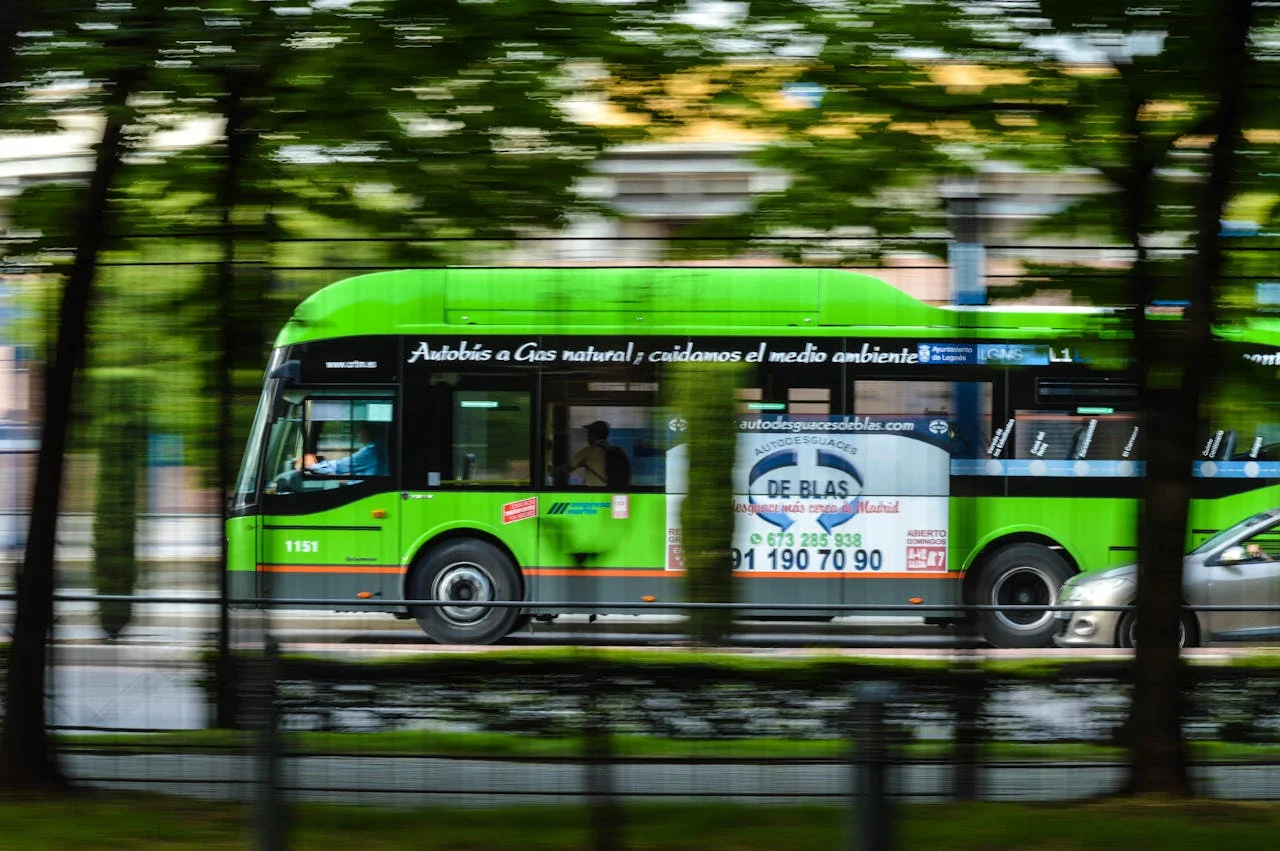
If you’re looking to start a career on the open Western European road, you should know that the process is highly standardised because of EU regulations. However, each country has its own specific administrative steps.
Here is your guide on how to become a bus driver and get a job in the Netherlands, Germany, and Belgium.
Bus Driver Shortages in the Heart of Europe
The crisis in freight transport is well-documented but an equally urgent problem is unfolding in the passenger transport sector as well. Today, the shortage of professional coach and bus drivers has reached a critical point across the Netherlands, Germany, and Belgium, potentially threatening the reliability of public transit and regional connectivity.
A Workforce in Transition
This crisis is a structural challenge, which is driven by the aging workforce. In 20024, Germany had already experienced a deficit of 20,000 drivers, and, as with truck drivers, the problem will only escalate if the current older drivers retire (more than half of them are over the age of 50).
The Netherlands is facing a similar problem and has been struggling to fix this problem since the last decade.This has transformed the job market into a “driver’s market,” where qualified professionals can command higher salaries, better shift flexibility, and significant relocation support.
Opportunities for New Talent
For those willing to enter the field, the benefits have never been more competitive. To combat the shortage, many transport companies in these three countries are now offering:
- Higher Wages: Gross monthly salaries are often pretty high, supplemented by generous bonuses for night, weekend, and holiday shifts.
- Relocation Assistance: Especially in the Netherlands and Germany, employers frequently provide free or subsidised housing and assistance with administrative paperwork for international recruits.
- Modern Fleets: Drivers in this region typically operate state-of-the-art electric or Euro-6 diesel buses, prioritizing driver ergonomics and passenger safety.
The Foundation: Category D License
All driver jobs have stringent legal requirements. The Category D license is the primary requirement for anyone wishing to operate a vehicle designed to carry more than eight passengers. While the license itself is standardized across the EU, the path to obtaining it involves several key phases:
- Age and “Accelerated” Access: While the standard minimum age is 24, the high demand for drivers has created “fast-track” options. In Germany and the Netherlands, if you are enrolled in a professional driver training program or already hold a Code 95 (initial qualification), you can obtain your license at 21, or even 18 for specific local routes.
- The Prerequisite: You cannot apply for a Category D license without already holding a valid Category B (car) license. Most employers also prefer candidates who have at least two years of active car driving experience.
- Medical and Psychological Fitness: Because you are responsible for human lives, the health checks are more rigorous than for standard licenses.
- In the Netherlands: This is managed by the CBR through a “Health Declaration.” You must be examined by a company doctor (Arbodienst) who tests vision, hearing, and cardiovascular health.
- In Germany: Known as the Ärztliche Untersuchung, you must pass a specialized eye exam and a performance test (Leistungstest) that measures your reaction speed, orientation, and concentration under stress.
- In Belgium: You must obtain a “Driving Ability Certificate” (Group 2) from an accredited medical center (like MedEx), which includes a mandatory report from an ophthalmologist.
The Professional Essential: Code 95
Simply having a Category D on your license is not enough to be hired; you must also have the Code 95 designation. This is the Certificate of Professional Competence (CPC), mandated by EU Directive 2003/59/EC to ensure all commercial drivers meet a high professional standard.
The Basic Qualification
If you are new to the industry, you must pass the “Initial Qualification.” This involves:
- Theory Exams: Multiple tests covering not just traffic laws, but also “Soft Skills” like passenger comfort, conflict management, and emergency procedures (e.g., first aid and fire safety).
- The 90-Minute Practical Test: This is a comprehensive evaluation of your driving skills. It includes a specific maneuver test (reversing into narrow bays and precision stopping) and a long-form city drive to observe how you handle real-world passenger interactions and traffic.
The 5-Year Cycle
Once obtained, your Code 95 is valid for five years. To prevent it from expiring, you must complete 35 hours of periodic training (Nascholing in Dutch, Weiterbildung in German) within every five-year window.
Modern Training Standards
At least 7 of these 35 hours must be a practical driving session. In the Netherlands and Belgium, these courses often cover “Eco-Driving” (to reduce fuel consumption and improve passenger comfort) and the latest updates in digital tachograph technology.
Country-Specific Nuances
The Netherlands
In the Netherlands, the Centraal Bureau Rijvaardigheid (or the CBR) handles all the testing, with the exams being mostly in Dutch, but you can take the theory exams in English for an extra fee.
Usually, drivers who take the test join a “BBL” or work-study program through a major transit company, and the employer pays for the license and Code 95 in exchange for a work contract.
These programs often include a paid salary from day one of training, ensuring financial stability while you transition into your new role. Furthermore, many Dutch transport operators now provide dedicated Dutch language courses as part of their onboarding to help international drivers integrate into the local public transport network.
Germany
In Germany, you must register with a driving school that’s authorised for heavy vehicles. To drive commercially, you must also pass the accelerated Basic Qualification” (Beschleunigte Grundqualifikation) at the IHK (Chamber of Commerce). Often, you can get an education voucher from job centers to cover the entire cost of the training.
This includes the driving school fees and examination costs. Additionally, the German market is increasingly offering “Umsteiger” (career-changer) modules that allow professional truck drivers to add the Category D license to their credentials in a significantly shorter timeframe.
Belgium
Becoming a bus driver in Belgium will be a little different based on regional differences. Chances are, you will have to enroll in a different internal driving school whether you’re located in Brussels, Flanders, or Wallonia. However, they will hire and train you if you meet their requirements, often providing a free 6-to-8 week intensive training course once you pass the initial selection.
In regions like Wallonia, specific “Formation-Insertion” plans (PFI) are designed to bridge the gap for job seekers by offering a lump sum to cover all administrative costs associated with the Category D license.
Training and Skills
To become a successful bus driver in the high-standard markets of Western Europe, your training will usually focus on three core areas that elevate the role from simple driving to professional transit management:
Understanding Vehicle Technology & Advanced Mechanics
Beyond steering, you must master the sophisticated systems of a modern bus. This includes understanding the operation of air brakes (and monitoring their pressure gauges for system integrity) and the effective use of retarders (auxiliary braking systems that prevent brake fade on long descents). You will also be trained on bus-specific mechanics like pneumatic door systems, kneeling functions for curb access, and increasingly, the operation of high-voltage electric or hydrogen drivetrains.
Following Safety & Security Protocols
You are the primary first responder in your vehicle. Training covers intensive emergency evacuation procedures, teaching you how to clear a full bus in under 90 seconds, and fire safety, which includes hands-on use of extinguishers and engine-bay suppression systems.
In the context of modern European security, this also includes training in “Safe Bus” protocols, which means identifying suspicious behavior, managing unattended luggage, and following strict communication hierarchies during a crisis.
Professional Interactions With Passengers
In the Netherlands, Germany, and Belgium, the “customer” experience is important. You will partake in training to manage conflicts and de-escalate stressful situations with difficult passengers while maintaining a calm schedule. A major focus is also placed on assisting passengers with reduced mobility. You must understand how to operate ramps and lifts, securing wheelchairs according to EU Regulation 181/2011, and understanding the specific needs of passengers with hidden disabilities or sensory impairments.
Final Thoughts
Obtaining all the necessary qualifications may cost upwards of a few thousand euros, but given the massive driver shortage in the Netherlands, Germany, and Belgium, almost all major transport companies are currently paying for 100% of the candidate’s training.
That said, if you already know how to become a bus driver (because you are one), and looking for work, feel free to register on Robin to connect with recruiters who can help you find new opportunities.