
 English
  Lietuvių
  Latviešu
  Polski
  Português
  Română
  Slovenčina
  Magyar
  Русский
  Espanol
  България
  Čeština
  Italy
Italy  Croatia
  Greek
Greek 

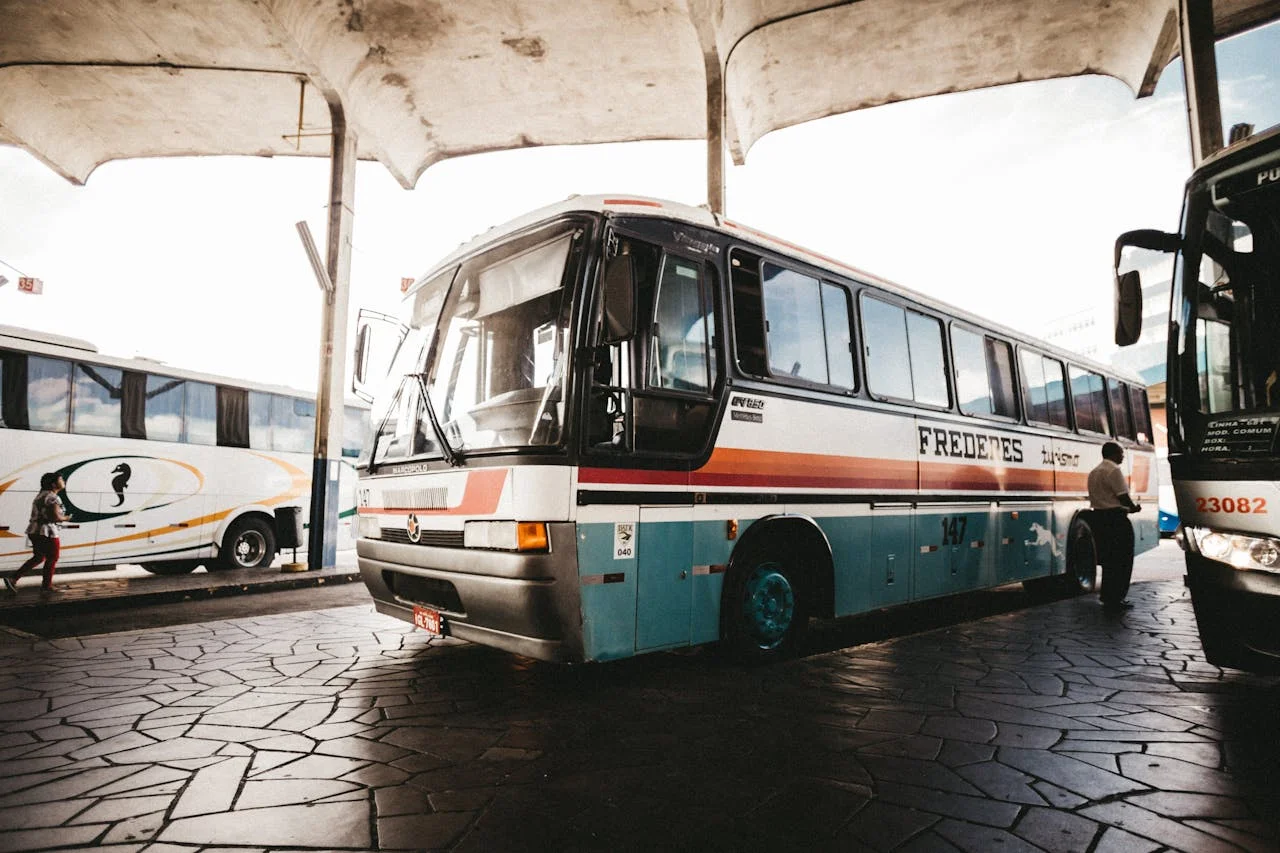
For many, the sight of a massive, modern bus navigating through city streets or across highways is the ultimate symbol of responsibility. While the vehicles look impressive, the safe transportation of people makes bus driving a pivotal role in the blue-collar job market.
Whether you want to get a professional definition of what a bus driver is, or you are looking for detailed bus driver job descriptions to start your applications, understanding the required skills, operational tasks, and essential permits, the info below can help you make the next step toward a successful career.
That said, in this article, we explore the core responsibilities and expectations of the role, including the technical requirements and the unique work environment of the modern driver.
Key Takeaways
- What is a bus driver? The main responsibilities of bus drivers are ensuring safe passenger transportation, providing excellent customer service, and maintaining strict timetables.
- The role requires you to attain specific licenses (Category D), the CPC (Certificate of Professional Competence), a medical certificate, and a positive attitude.
- Success requires a blend of defensive driving, excellent social skills, and punctuality to ensure transport reliability.
What Do Bus Drivers Do?
Operating a bus is the essential driver job that’s the essential link that keeps cities accessible and gets travelers to their destinations.
Typically, a bus driver’s job description focuses on transporting passengers, using regional coaches, touringcars, or city buses. These drivers are a quintessential link in the public transport and tourism industries, moving people to work, school, or holiday destinations.
Depending on the specific job role or type, a driver might be a city transit expert navigating dense urban traffic or a long-haul touringcar driver crossing international borders.
Common responsibilities of bus drivers include:
Passenger Safety & Comfort
In addition to driving, bus drivers are also responsible for the well-being of everyone on board.
This involves operating the vehicle smoothly to prevent falls, monitoring the interior via mirrors or CCTV to ensure passenger order, and being constantly vigilant of traffic conditions to avoid sudden braking.
Regulatory Compliance & Hours of Service
You must strictly follow European traffic laws and the “Mobility Package” regulations. This includes accurately operating the digital tachograph to log your driving, “other work,” and rest times. In the EU, you generally cannot drive more than 4.5 hours without a 45-minute break, and your total daily driving is capped to ensure you are never operating while fatigued.
Professional Customer Service
You are the face of the transport company. As such, you are responsible for welcoming passengers, validating their passes or tickets, and answering their questions regarding connections and routes.
In many regions of Germany, Belgium, and the Netherlands, you may also be responsible for fare collection and providing change while maintaining a friendly, professional demeanor even during peak travel hours.
Assisting Passengers with Limited Mobility
A key part of the modern driver’s role is ensuring accessibility. You will operate hydraulic “kneeling” systems to lower the bus and deploy manual or automatic ramps for wheelchair users. Under EU Regulation 181/2011, you play a vital role in ensuring that passengers with disabilities or reduced mobility can travel safely and with dignity.
Technical Inspections & Vehicle Care
Before leaving the depot, you will also be responsible for conducting a thorough pre-trip inspection, checking brakes, steering, lights, and emergency exits. At the end of your shift, a post-trip check is required to report any mechanical issues to the maintenance team and ensure the vehicle is clean and ready for the next day’s service.
Schedule Management
You are responsible for maintaining the “tact” or frequency of the route. This requires balancing safe driving with the need to arrive at stops on time, often communicating with a central dispatcher to navigate around accidents, roadworks, or unexpected traffic congestion.
Professional Requirements & Licencing
Operating a commercial passenger vehicle is more demanding than standard driving roles. Apart from getting the specific permits and understanding key EU and member state regulations, you also have to ensure passenger safety and great customer service.
Education and Training
Operating a commercial passenger vehicle is far more demanding than standard driving roles. In addition to technical mastery of a large vehicle, you are responsible for the lives of dozens of passengers. This requires a unique blend of permits, health clearances, and specialised knowledge of EU regulations.
Age Requirements: Starting Your Career
The age at which you can begin driving professionally depends largely on your level of qualification.
That said, the standard age is 24 in all three countries to get a full Category D licence without prior professional training. However, if you have previously enrolled in a professional driving training program and you already have your Code 95 (CPC) qualification, the age limit can be lowered.
What this means is that you will be able to start city and regional driving at 21, and even at 18 in some specific cases(like local transport in Belgium or apprenticeship programs in Germany).
License Categories: D and DE
- Category D (The Bus License): This is the mandatory requirement for any vehicle designed to carry more than 8 passengers. This includes everything from standard city buses to luxury international coaches.
- Category DE (Bus with Trailer): If your role involves towing a trailer with a Maximum Authorised Mass (MAM) exceeding 750 kg (common for long-distance coaches carrying extra luggage or equipment), you must obtain the DE extension.
- The Foundation: You must already hold a valid Category B (car) license before you can apply for any Category D training.
CPC (Code 95): Your Professional “ID Card”
The Certificate of Professional Competence (CPC), known as Code 95, is the most critical document for a bus driver in the EU.
New drivers must pass a rigorous set of theory exams and a 90-minute practical “case study” test. This covers more than just driving—it tests your knowledge of passenger security, emergency evacuation, and vehicle load distribution.
To keep your skills sharp, you are legally required to complete 35 hours of periodic training every five years. This training ensures you are updated on the latest safety technologies and eco-driving techniques.
Medical & Psychological Fitness
Because the mental and physical load of passenger transport is high, regular health screenings are mandatory.
- Physical Check-up: You will undergo regular exams to test vision, hearing, and heart health. In Germany, this is the Ärztliche Untersuchung, and in the Netherlands, it is coordinated via the CBR.
- Psychological Assessment: Increasingly, employers in Central Europe require a psychological evaluation to ensure drivers can maintain a calm, professional demeanor under the stress of heavy traffic or difficult passenger interactions.
- Frequency: For drivers under 50, these checks are usually required every 5 years; after age 50 (or 60 in some regions), the frequency increases to every 2 years to ensure continued safety on the road.
Essential Skills for the Road
Driving is only one part of the bus driving experience. There are also other skills one needs to master to become a master at their craft.
Stress Management
Operating a bus in the heart of Europe can be intense due to heavy traffic congestion in cities like Amsterdam or Brussels, unpredictable weather, and passenger dissatisfaction during delays.
Managing stress is essential for maintaining safety and a high standard of service. Successful drivers practice “mindful awareness,” staying focused on the immediate task and using deep-breathing techniques during short breaks or at red lights.
By maintaining a calm composure, you not only ensure safer driving but also set a peaceful tone for the entire vehicle, preventing passenger tensions from escalating.
Professional Communication
Clear, proactive communication with dispatch is vital for reporting road hazards, mechanical issues, or delays, allowing the control center to adjust the network in real-time.
Just as important is your interaction with passengers; providing professional service involves more than just answering route questions. It requires active listening and the ability to explain complex situations (such as a detour or a technical fault) calmly and clearly, which builds trust and reduces frustration among travelers.
Unwavering Punctuality
In the Netherlands, Germany, and Belgium, the public transport network relies on keeping strict schedules to ensure seamless transfers between buses, trams, and trains. Punctuality is a core skill that requires excellent time management and foresight.
You must be able to plan your pre-trip checks efficiently and adjust your driving pace to compensate for minor delays without compromising safety. Being reliable and “on the clock” is often the most valued trait for employers in these precision-oriented logistics hubs.
Creative Problem-Solving
On the road, the unexpected is the only constant. Whether it’s a sudden road closure, a medical emergency on board, or a minor vehicle maintenance need, you must be able to resolve issues swiftly and methodically.
Problem-solving involves analysing a situation, considering the safety of your passengers first, and implementing a solution, such as following a pre-planned diversion or safely pulling over to coordinate with emergency services. Mastering this skill allows you to handle the chaos of the road with confidence and minimal disruption to the service.
The Work Environment
This job is highly mobile and social. The office is the driver’s cab while the surroundings are in constant motion. Based on the type of driving you are doing, the surroundings may be bustling city centers to countrysides and scenic tourist routes.
To be more practical, the bus driver job description involves:
Shift Work and Irregular Hours
You will often work a schedule that includes early mornings, late nights, and weekends to keep the public transport network running. In the Netherlands and Germany, this frequently includes “split shifts, “where you work the morning rush hour, take a significant midday break, and return for the evening commute.
While these irregular hours require flexibility, they are balanced by strict EU regulations that mandate at least 11 hours of rest between shifts and a maximum of 9 to 10 driving hours per day.
Constant Human Interaction
Unlike freight drivers, you are in continuous contact with the public. You are the go-to person of the transport service on the bus, responsible for greeting passengers, validating tickets, and providing route information.
This requires strong “soft skills” and the ability to remain calm and professional during peak hours or when dealing with difficult passengers. In countries like Belgium and Germany, you may even receive specialised training in de-escalation and customer service to handle these interactions with confidence.
High Level of Independence and Autonomy
Once you leave the depot, you are the primary decision-maker for your vehicle. You have the autonomy to manage your driving style and respond to real-time road conditions. However, this independence is supported by high-tech monitoring; your performance is measured by your ability to stick to a precise timetable and is logged via a digital tachograph.
Modern telematics systems in the Netherlands and Germany also provide real-time feedback on fuel efficiency and smooth braking, helping you maintain a high standard of professional driving.
Dynamic Safety Management
Your environment is one of high responsibility. You are constantly monitoring the interior of the bus for passenger safety while simultaneously navigating complex urban traffic, cyclists, and pedestrians. This dual focus makes the work environment mentally engaging, as no two loops of your route are ever exactly the same.
Hit The Open Road With Robin
Bus driving isn’t just a job. It’ s a critical profession keeping society moving. It’s all about mastering road safety, regulatory compliance and offering excellent hospitality. Drivers ensure that people reach their destinations safely every day. While the lifestyle requires physical stamina and flexibility, it offers job security and a sense of community that few other careers can match.
If you are ready to take the wheel, register on Robin and reach out to our recruiters who are more than happy to help you find a bus driver job in the Netherlands, Belgium, or Germany.